
Cocaine
Cocaine became a significant part of Reggie’s life during his late teens and twenties. His writings trace a progression from exposure to cocaine through Montreal connections, to increasingly heavy use, drug dealing, arrests and eventually addiction.
Before exploring that part of his story, it is helpful to understand what cocaine is, how it was commonly used during the period Reggie wrote about, and the effects and risks associated with it.
On This PagePart 1 — Understanding Cocaine · Part 2 — Cocaine in Reggie’s Life · Part 3 — Selected Stories & Writings
Part 1 — Understanding Cocaine
Cocaine is a powerful stimulant produced from the leaves of the coca plant. It acts on the central nervous system and can produce a short-lived increase in energy, alertness, confidence and feelings of euphoria. It can also be highly addictive.
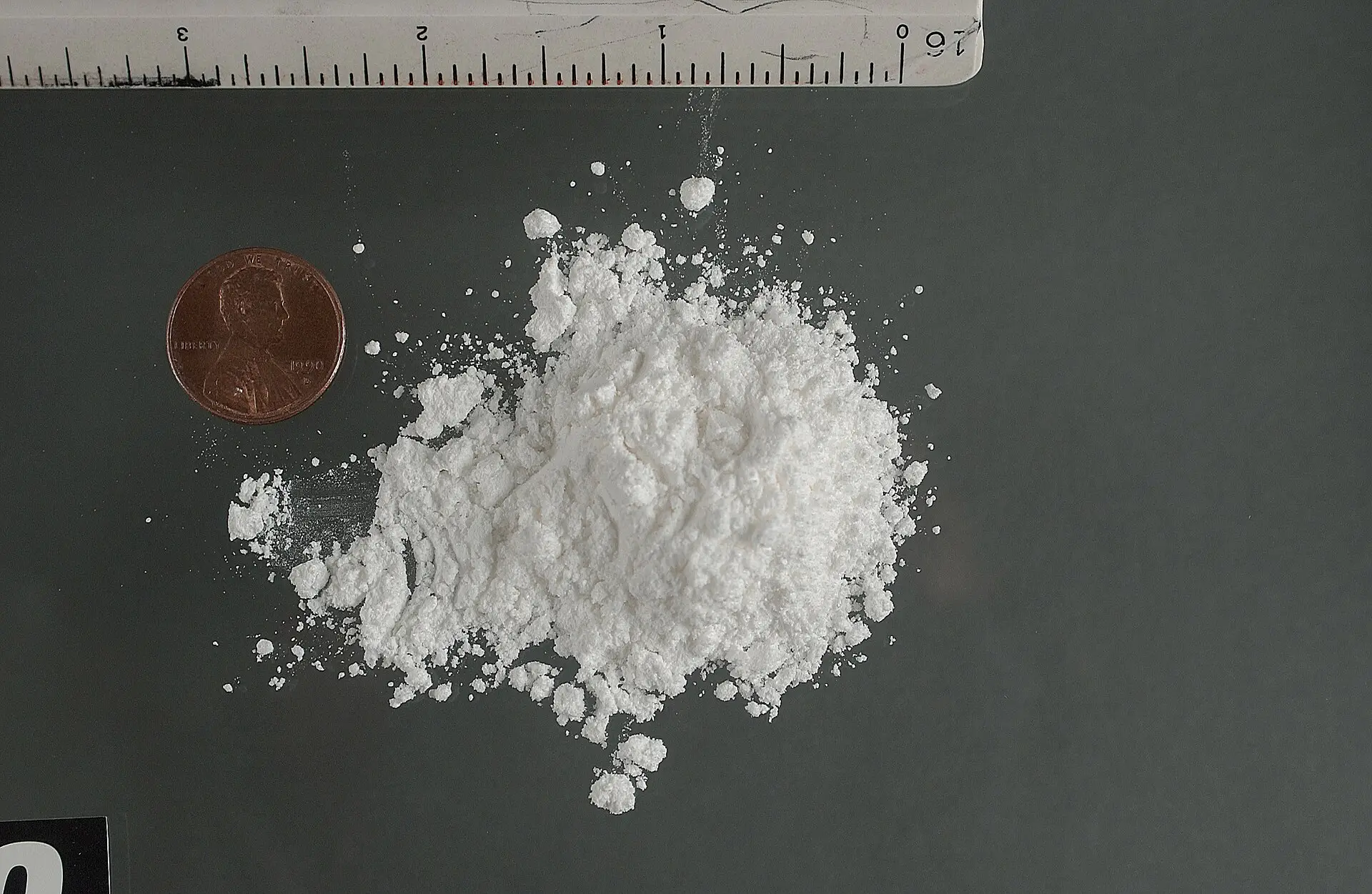
Powder Cocaine
The form most closely associated with Reggie’s writings was powdered cocaine, commonly called coke.
Powdered cocaine is generally a fine white or off-white powder. During the period covered by Reggie’s story, it was commonly divided into small quantities for individual use or sale.
Cocaine sold illegally may also contain other substances added before it reaches the person using it. This means its actual composition and strength may be uncertain.
How Cocaine Was Used
Reggie’s writings primarily describe snorting cocaine. Powdered cocaine can also be dissolved and injected. Another form, crack cocaine, is smoked.
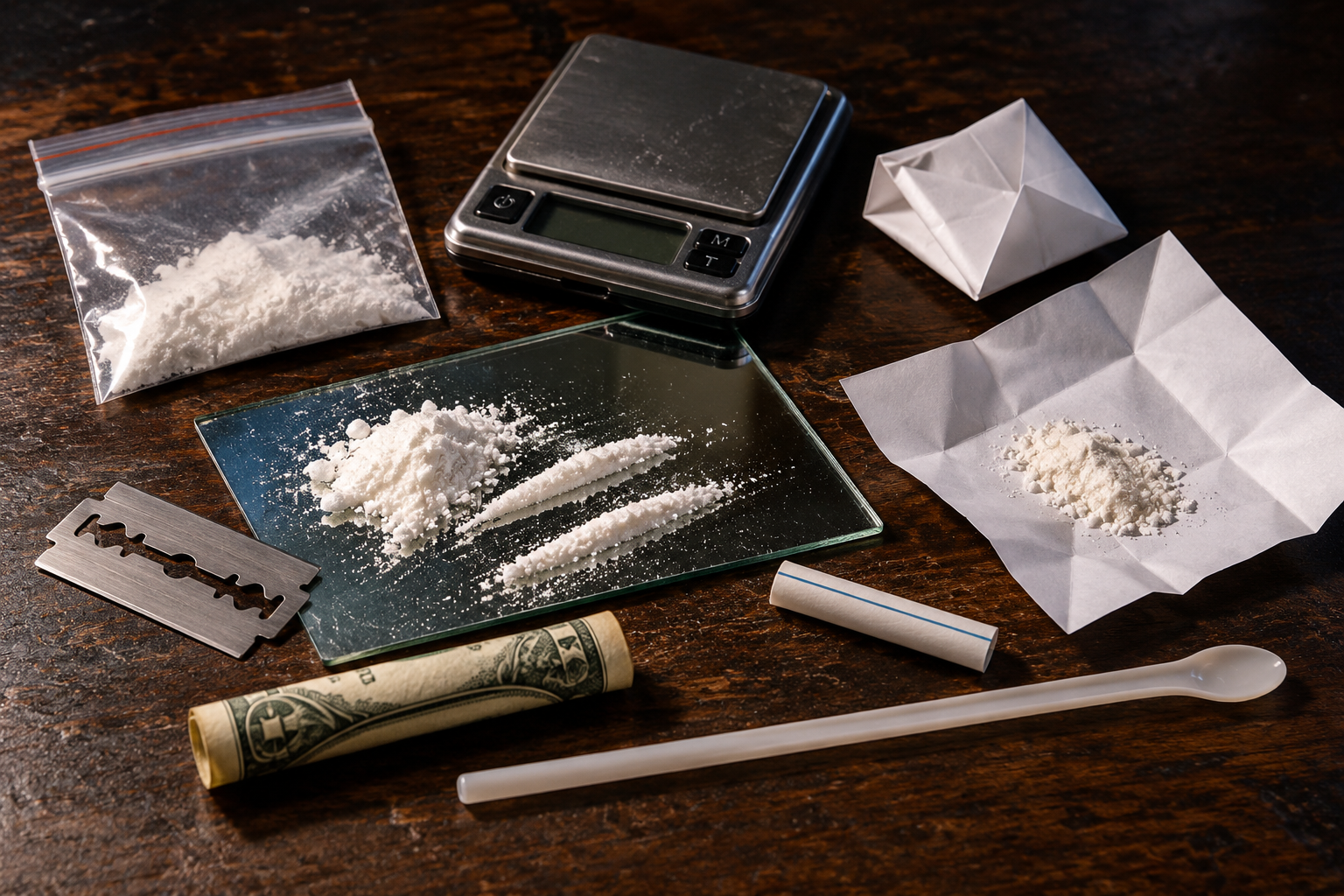
Snorting Cocaine
Powdered cocaine can be inhaled through the nose, usually after being arranged into narrow lines on a flat surface.
Objects associated with this method may include a small mirror or other flat surface, a razor blade or card for dividing the powder, and a short tube or rolled paper used to inhale it.
Reggie’s writings include an especially striking example of this method of use: being caught snorting cocaine at a Stevie Ray Vaughan concert in 1989.
Other Methods
Cocaine can also be dissolved in water and injected. Crack is a form of cocaine that can be smoked. Different methods deliver the drug to the body at different speeds and can change both the intensity of its effects and the associated risks.
These other forms are included here for context; Reggie’s own story on this page is centred primarily on powdered cocaine.
Effects of Cocaine
Cocaine acts quickly. Short-term effects can include increased energy, alertness and self-confidence, as well as euphoria. It can also cause restlessness, irritability, anxiety, panic and paranoid thinking. Physical effects can include dilated pupils and reduced need for food and sleep.
The effects can vary considerably depending on the person, the amount taken, how the cocaine is used and whether other substances are involved.
The Heart and Brain
Cocaine places considerable stress on the cardiovascular system. It can increase blood pressure and cause a rapid or irregular heartbeat. Serious complications can include heart attack and stroke, including among younger people without known cardiovascular disease.
Repeated and Heavy Use
With continued use, cocaine can become increasingly disruptive to everyday life. Long-term use can be associated with depression, sleep problems, extreme changes in mood, paranoia and other serious mental-health effects. Regularly snorting cocaine can also damage the nose and sinuses.
Cocaine and crack can lead to substance use disorder. Tolerance may develop, while stopping after persistent use can produce intense cravings, fatigue, irritability, depression, disturbed sleep and loss of physical and mental energy.
Overdose
Cocaine overdose can be fatal. Possible consequences include seizures, respiratory failure, stroke, irregular heartbeat, heart attack and heart failure. Risk can increase when cocaine is taken in large amounts over a short period or combined with other substances.
Part 2 — Cocaine in Reggie’s Life
Cocaine entered Reggie’s life after marijuana, hash and hallucinogens were already familiar to him. Over the years that followed, it became increasingly prominent in both his drug use and the world of drug dealing around him.
Reggie left unusually detailed accounts of this period in My Story and The History of Me. Together, they show cocaine changing from another drug he encountered into something that eventually occupied a much larger place in his life.
The Montreal Connection Continues
Montreal had already become important in Reggie’s drug story through his older cousin. As a young teenager, Reggie described his cousin bringing marijuana and hash to Prince Edward Island and involving him in selling marijuana.
As Reggie grew older, that connection expanded beyond cannabis. His writings describe travelling to Montreal to obtain hash and cocaine, which he then brought back for sale.
From the family’s perspective, this represented an important change. What had begun years earlier with a twelve-year-old selling marijuana had developed into Reggie travelling outside Prince Edward Island to obtain drugs from a larger market.
Cocaine was no longer simply something circulating among people he knew. It had become part of the supply network in which he was participating.
Cocaine and the University Years
By his university years, Reggie was selling drugs while attending Saint Mary’s University in Halifax.
His accounts of this period describe trips to Montreal for hash and cocaine and returning with drugs to sell. Drug dealing increasingly existed alongside university life rather than apart from it.
In 1986, that world caught up with him when he was arrested for selling hash. Reggie later summarized the consequences starkly in his timeline: he received probation and a $600 fine, left university and moved to Toronto.
Although that particular arrest involved hash rather than cocaine, it marked the end of an important period in which both drugs had become part of his dealing.
Cocaine Becomes More Important
Reggie’s own chronology shows that cocaine became much more significant during the years that followed.
After Toronto, he returned to Prince Edward Island and then moved to Moncton, New Brunswick, where he enrolled in the Avionics program at NBCC.
Academically, Reggie performed extremely well. His records show him near the top of his class during the early terms, and he eventually graduated with honours.
At the same time, his own account describes increasingly heavy cocaine use.
That contrast is important to Reggie’s story. Serious drug use did not necessarily produce an immediate outward collapse. For a period, Reggie was able to continue attending school, earning strong grades and progressing toward a career while cocaine was becoming a much larger part of his life.
The Stevie Ray Vaughan Concert
One of Reggie’s most memorable cocaine stories occurred in 1989.
In The History of Me, he wrote that he was caught snorting cocaine at a Stevie Ray Vaughan concert. When confronted, he swallowed the evidence.
He spent the night in jail but was ultimately found not guilty.
The incident is striking not only because of the arrest. It also illustrates something that appears elsewhere in Reggie’s story: when faced with the possibility of being caught with drugs, he could react quickly and take significant risks to destroy the evidence.
Years later, swallowing drugs would appear again in very different circumstances.
Cocaine Becomes a Business
By his own account, he was no longer simply using cocaine or selling drugs on the side. After establishing a home of his own, he began selling cocaine seriously.
Reggie described buying cocaine cheaply by the kilogram in Montreal and selling it in much smaller quantities on Prince Edward Island. In his words, the money was good, and the business continued for several years.
At the same time, his own cocaine use was escalating.
That combination is important to understanding this period of Reggie’s life. Greater access to cocaine and the money generated by selling it existed alongside relationships, education, work and attempts to establish an adult life.
Reggie later described his cocaine consumption during this period as massive.
The full story of how his cocaine dealing developed is told separately:
Read: Reggie Starts Selling Cocaine Seriously
From Cocaine to Heroin
By 1994, Reggie’s drug history was entering another stage.
In his timeline, he wrote that he cut back on his massive cocaine use and began using heroin. He also described experiencing his first heroin withdrawal during this period.
That transition is significant, but it should not be interpreted as cocaine somehow inevitably leading to heroin. Reggie’s life involved many drugs, relationships, circumstances and choices over many years.
What his own chronology does show is that by the time heroin entered his life, cocaine was no longer an occasional recreational drug. It had already become a major part of his substance use.
Heroin would eventually become central to the addiction that dominated much of Reggie’s later life, but cocaine remained an important part of the story that preceded it.
Part 3 — Selected Stories & Writings
Cocaine appears in many places throughout Reggie’s writings. The selections below provide some of the clearest first-hand accounts and family context for understanding how cocaine became part of his life.
My Story
Reggie’s own account
My Story is Reggie’s most detailed account of his life and provides important context for the progression of his drug use and dealing. His experiences with cocaine form part of a much larger story that began with marijuana and hash when he was young and eventually developed into serious addiction.
The History of Me
Reggie’s own timeline
Reggie’s year-by-year chronology provides some of the clearest markers in his cocaine story. It records his university years, his experiences while studying Avionics in Moncton, the 1989 Stevie Ray Vaughan concert incident, his heavy cocaine use and the later transition toward heroin.
Because these entries were written by Reggie himself, the timeline is particularly valuable for establishing when events occurred and how he chose to describe them.
His Montreal Cousin & Supplier
Family recollection and context
Reggie’s older Montreal cousin appears early in his drug story as a source of marijuana and hash. As Reggie grew older, Montreal also became connected with his access to cocaine.
Family recollections provide additional context about the relationship, the attraction Montreal held for a young Reggie, and the drug connections that developed around it.
Read: His Montreal Cousin & Supplier
Reggie Starts Selling Cocaine Seriously
Reggie’s account and family context
After returning to Prince Edward Island and establishing a home of his own, Reggie wrote that he began selling cocaine “seriously.” He described obtaining cocaine cheaply by the kilogram in Montreal and selling it in much smaller quantities on Prince Edward Island.
This marked an important escalation from his earlier teenage and university drug dealing and helps explain how cocaine became increasingly central to both his income and his own drug use.
Read: Reggie Starts Selling Cocaine Seriously
The Stevie Ray Vaughan Concert
Reggie’s own account
In 1989, Reggie wrote that he was caught snorting cocaine at a Stevie Ray Vaughan concert, swallowed the evidence, spent the night in jail and was later found not guilty.

Artist’s reconstruction: AI-generated image depicting Reggie at a Stevie Ray Vaughan concert, based on Reggie’s account of the incident.
Explore More in the Archive
This page highlights selected material from the archive. Additional references may appear throughout Reggie’s writings, family recollections, documents and other stories. Use Search the Archive to explore this subject further.