
His Rumrunner Grandfather
Reggie often compared drug dealers to the rum-runners of Prohibition. When he did, I believe he was thinking in particular about his grandfather—the man he was named after.
Reginald Stephen MacDonald, known locally as “Reggie Alec,” had been involved in the rum-running trade between Prince Edward Island and St. Pierre and Miquelon. His story became part of our family history, and I heard Reggie refer to his grandfather’s business many times.
Reggie was only five years old when his grandfather died. His death came within roughly eight days of the deaths of another relative and one of Reggie’s favourite pets. Reggie later wrote about that period, and it clearly affected him deeply.
But his grandfather’s influence did not end with his death. The stories surrounding him—boats, rum-running, money, risk and encounters with the law—became part of the family mythology Reggie grew up hearing.
That matters because, years later, Reggie sometimes appeared to see a parallel between what his grandfather had done with alcohol and what his own generation was doing with illegal drugs.
This is the story of Reggie’s grandfather, Reginald Stephen MacDonald—“Reggie Alec.”
Reggie Alec? Who’s Alec?
“Alec” wasn’t his middle name. It identified which MacDonald family he belonged to.
Souris is a small community, but there are a lot of MacDonalds. One traditional way of distinguishing people with the same name was to identify them through previous generations.
Paternally, for example, my brother Reggie could be identified as “Reggie Jim Reggie Alec.” Through our mother’s side, he could be “Reggie Helen Arty John Vitalis (V).”
For genealogists, it’s remarkably useful. A few words can sometimes trace a person back four or five generations.
It’s a PEI thing.
The First Run — 1924
In 1924, my grandfather was a 23-year-old lobster fisherman with a lot of ambition.
Lobster was not the premium product it is today. A fisherman might earn only several hundred dollars in a year, there was no modern social safety net, and poverty was common. Families prepared carefully for winter, preserving food and storing root vegetables, salted cod and smoked fish.
It was a hard way of life.
The previous fall, my grandfather had heard about a fisherman who made a “run” to the French islands of St. Pierre and Miquelon, bought a load of rum, brought it back to Prince Edward Island and more than quadrupled his money.
My grandfather decided he was willing to take the same risk.
In December 1924, he set off for St. Pierre in his lobster boat. The boat had no cabin, leaving him exposed to the winter wind, waves and cold for much of the voyage. By the time he arrived, according to the family story, he was nearly dead from exposure.
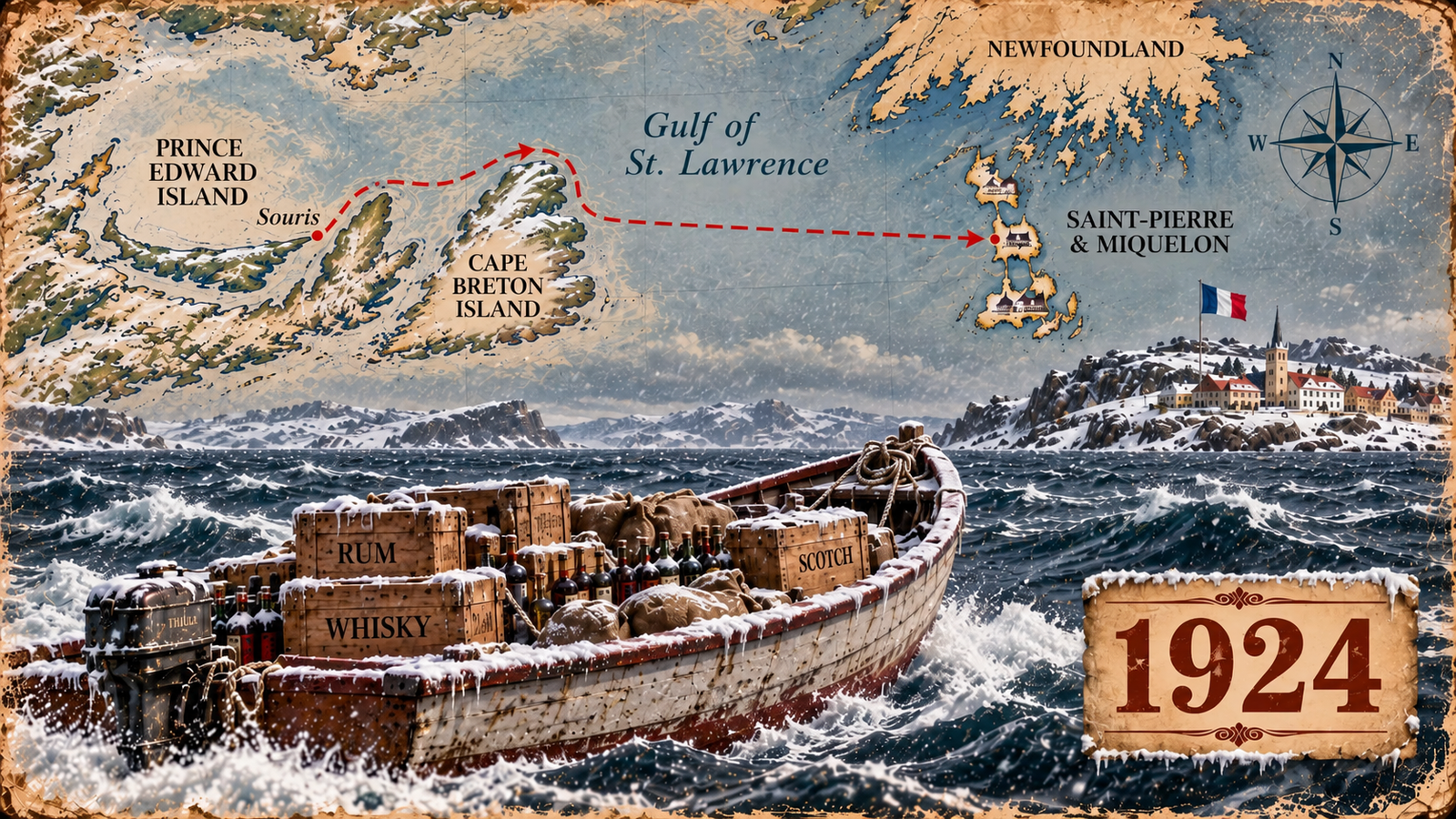
While there, he met Henri Moraze, a major figure in the St. Pierre liquor trade. The two would eventually become close friends and do business together for almost 25 years.
The “Booze Scandal to End All Booze Scandals”
Rum-running also carried the risk of arrest.
In 1935, my grandfather became caught up in a major Canadian liquor-smuggling prosecution involving more than 60 defendants. Among the best-known defendants were members of the Bronfman family, who had become prominent figures in Canada’s liquor industry.
The case was unusual because this was no longer primarily about supplying alcohol to Prohibition-era America. Prohibition in the United States had ended. Instead, Canadian authorities alleged that liquor exported tax-free to St. Pierre and Miquelon was being smuggled back into Canada, where it could be sold without Canadian duties having been paid.
A January 1935 newspaper account described the investigation as what the government believed was a “booze scandal to end all booze scandals.”
My grandfather spent approximately two months in a Montreal jail before the case went to trial. He was ultimately acquitted.
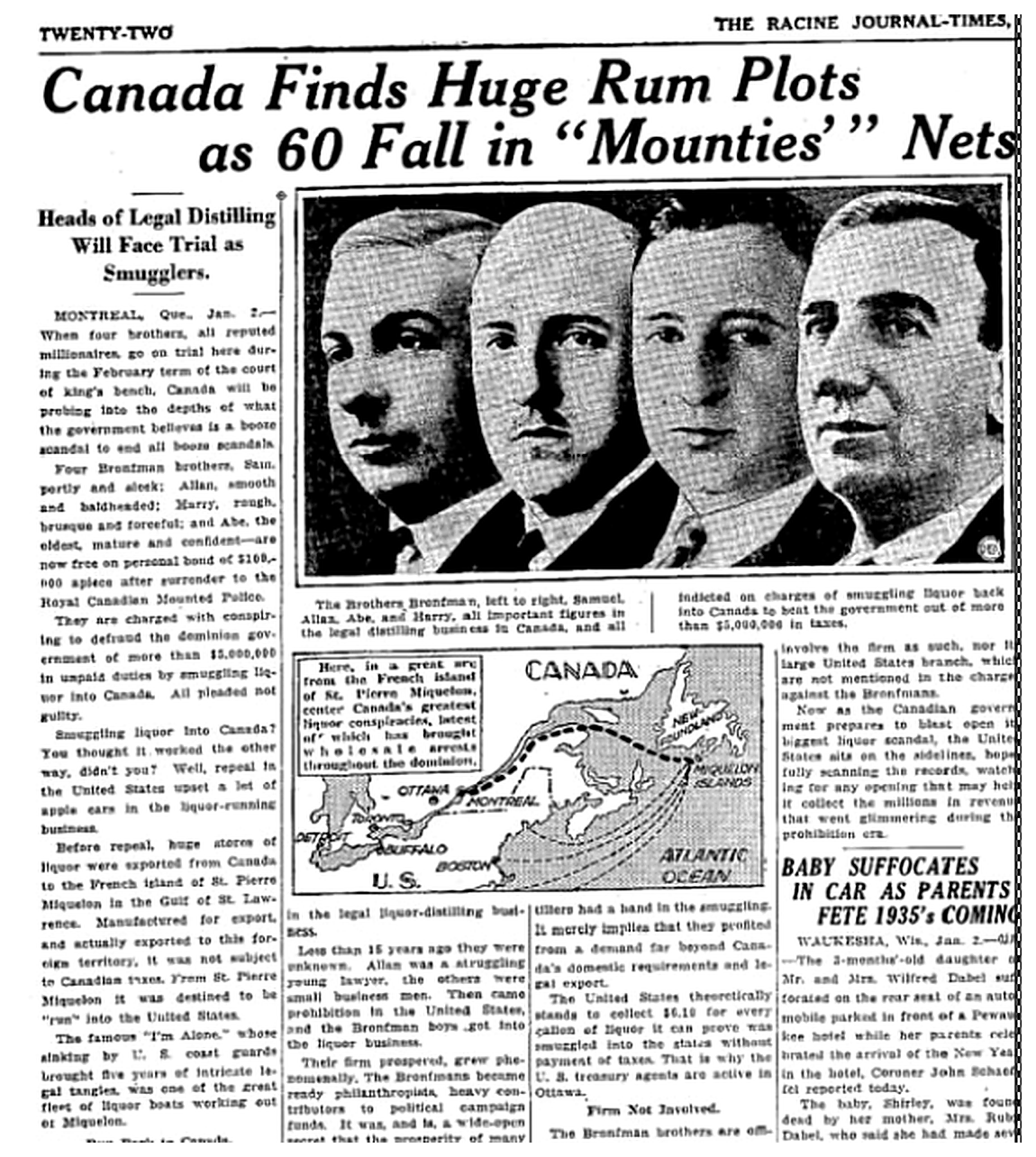
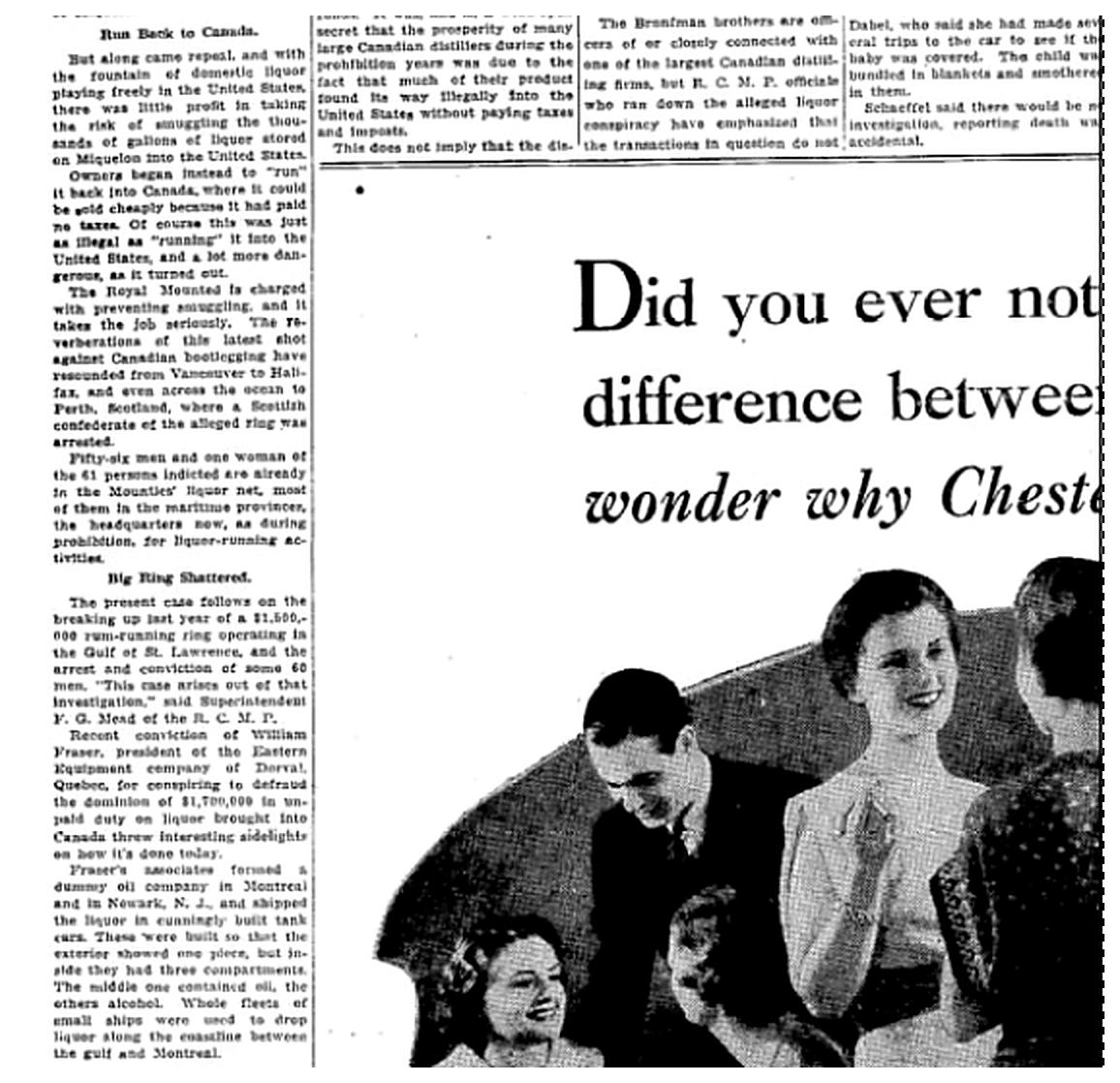
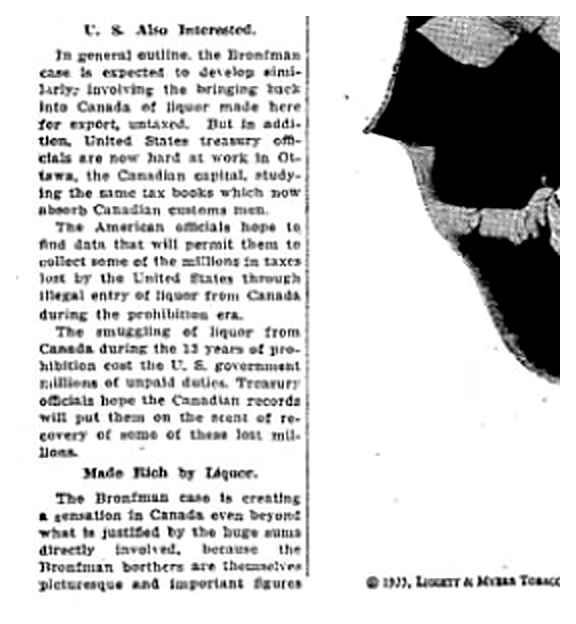
From the archive: The original newspaper pages are reproduced below. Because the surviving copies are difficult to read, enhanced versions have also been provided.
The Legacy Reggie Inherited
By the time Reggie was old enough to understand these stories, his grandfather was gone. But the legend surrounding him remained very much alive.
To a young person, it was an extraordinary family story: boats travelling through dangerous seas, St. Pierre, smuggled liquor, large amounts of money, encounters with police, jail—and ultimately an acquittal.
Looking back, I think this history influenced the way Reggie sometimes understood his own involvement in the drug trade. He did not invent the comparison between drug dealers and rum-runners casually. He had grown up knowing that the grandfather whose name he carried had once made money moving an illegal or illicitly traded commodity through many of the same waters and communities Reggie knew.
But there was an important difference that could easily disappear inside the romance of the family story.
The stories handed down through a family tend to remember the adventure. They do not always preserve the fear, the danger, the possibility of prison, or what might have happened if things had turned out differently.
Decades later, Reggie would make his own choices about risk, easy money and the law.
His grandfather’s story did not determine those choices. But I believe it helped shape the way Reggie thought about them.