
Drug Paraphernalia & Warning Signs
When someone has never been around drugs, the signs of drug use may not be obvious.
A parent might recognize a bottle of alcohol or a marijuana joint, but other objects associated with drug use can look completely ordinary. A small digital scale, a piece of glass tubing, a package of rolling papers, a burned kitchen knife or an unexplained collection of loose pills may mean nothing to someone who has never encountered them before.
This page is intended to help parents, families and other readers recognize some of the objects and changes that may be associated with drug use.
It is not intended to teach anyone how to prepare or consume drugs.
One Sign Does Not Prove Drug Use
Finding an unfamiliar object does not necessarily mean that someone is using drugs.
Many objects associated with drug use have perfectly legitimate purposes. A scale can be used for cooking or hobbies. Rolling papers can be used for tobacco. Syringes may be needed for legitimate medical treatment. A change in friends, sleeping habits or school performance can have many explanations.
What may be more significant is a pattern of things that do not otherwise make sense, particularly when physical objects appear alongside noticeable changes in behaviour, relationships, finances, school, work, sleep or health.
Health Canada identifies changes in personality, habits, relationships, finances, school or work performance and frequency of substance use among signs that someone may be struggling with higher-risk drug or alcohol use.
Measuring and Packaging
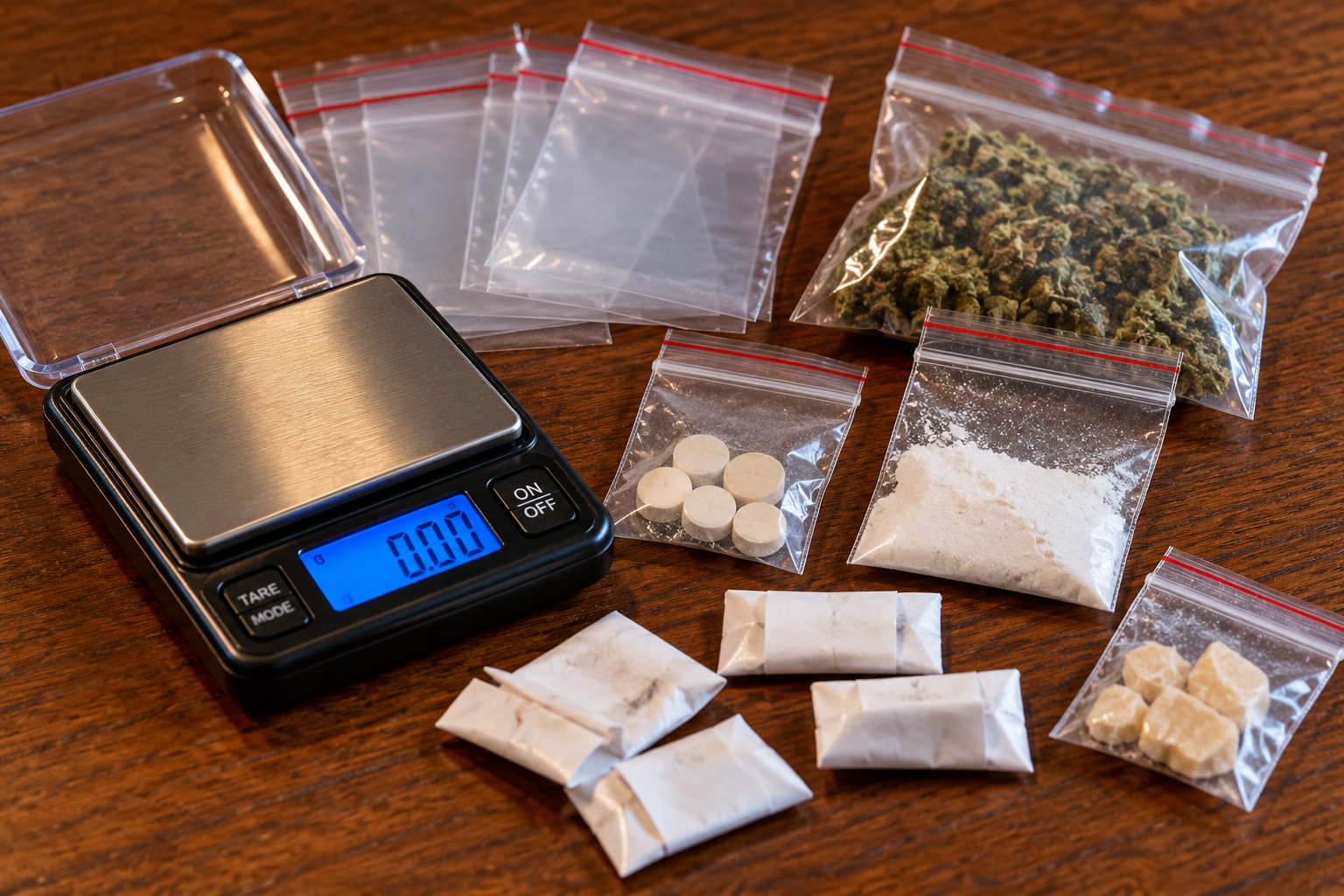
Small scales may be used to weigh drugs sold or purchased in small quantities.
Drugs may also be carried or stored in small plastic bags, folded paper packets, small containers or other packaging.
These items have many legitimate uses, so their presence alone proves nothing. Their significance depends upon what else is found and the circumstances in which they appear.
Pipes and Water Pipes
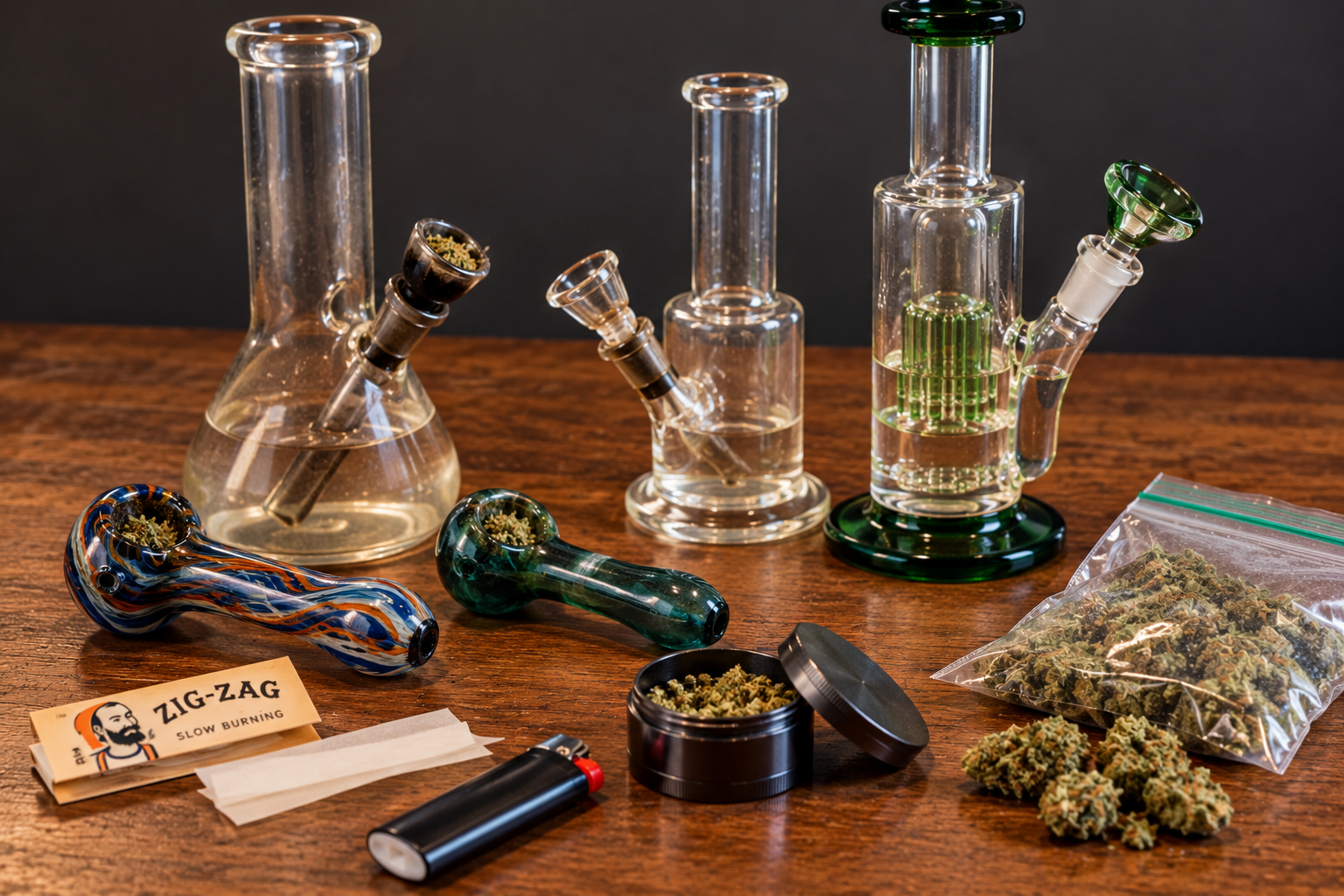
Pipes and water pipes may be associated with smoking cannabis or other drugs. Their appearance varies enormously, from commercially manufactured products to improvised objects.
DEA drug-education resources include pipes, bongs and syringes among examples of drug paraphernalia, illustrating how different these objects can look.
An unusual smell, residue, scorching or other unexplained changes to an object may sometimes provide additional context, but an unknown substance should never be tasted or closely smelled in an attempt to identify it.
Rolling Papers
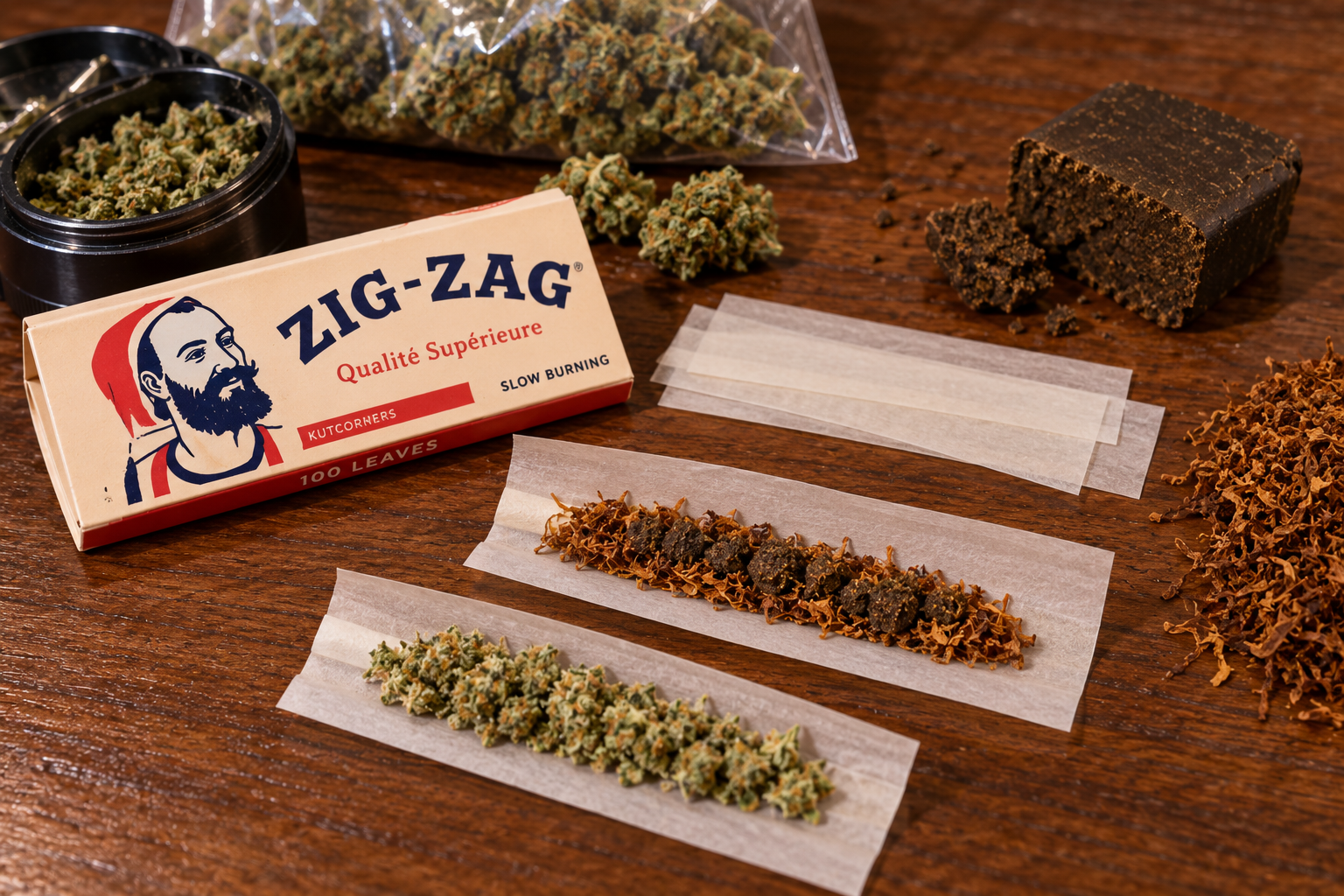
Rolling papers are commonly associated with hand-rolled tobacco and cannabis.
They are widely available and have legitimate uses. Their presence is therefore not evidence by itself that someone is using cannabis or another drug.
Cocaine-Related Objects
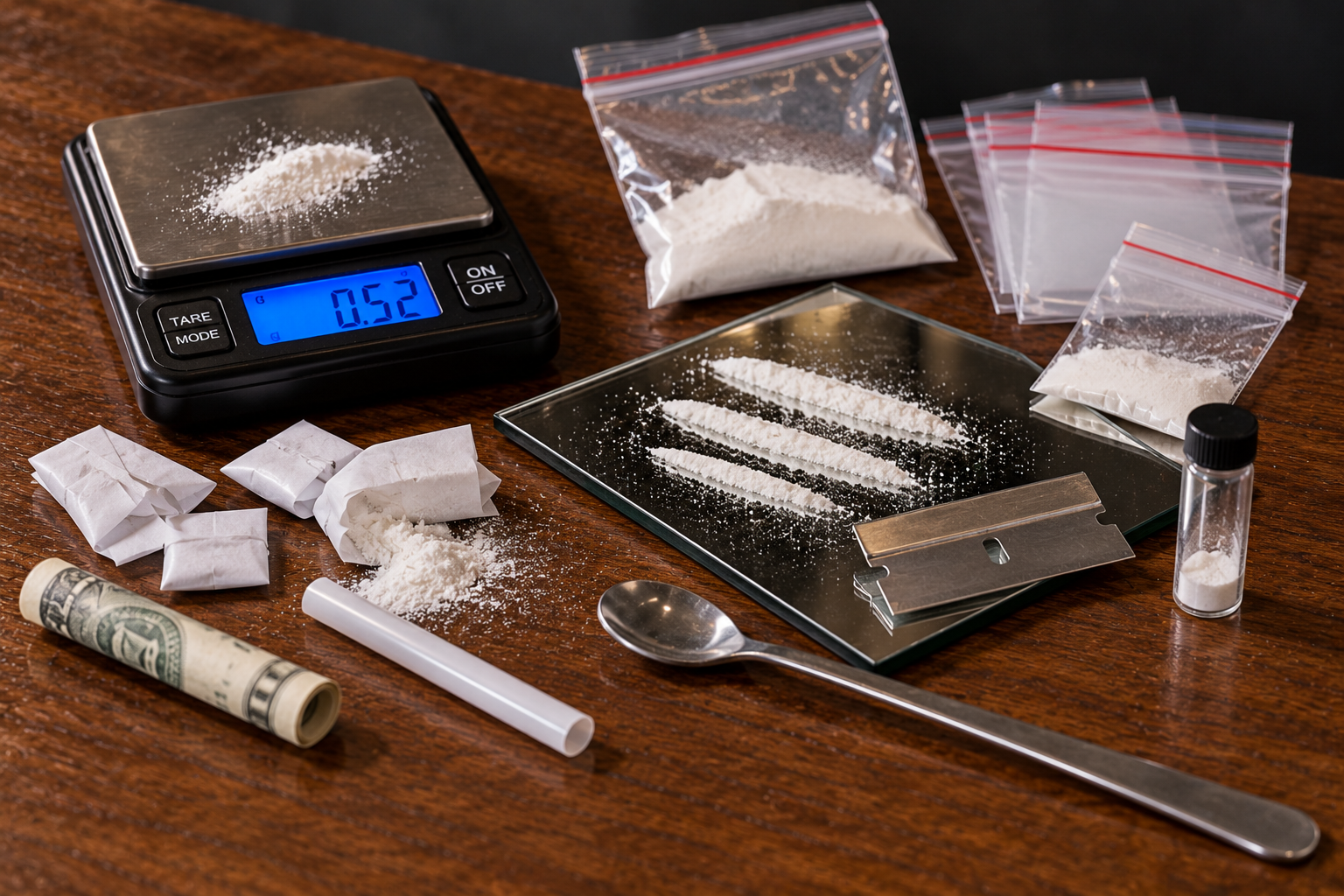
Cocaine is often carried in small packets, bags or folded paper.
Other objects may sometimes appear in association with cocaine use, including short tubes or straws and small flat surfaces.
Again, these are contextual clues rather than proof. Many ordinary objects can be repurposed.
The purpose of showing them here is simply to help someone recognize an object or arrangement that might otherwise be puzzling.
Needles and Injection Equipment
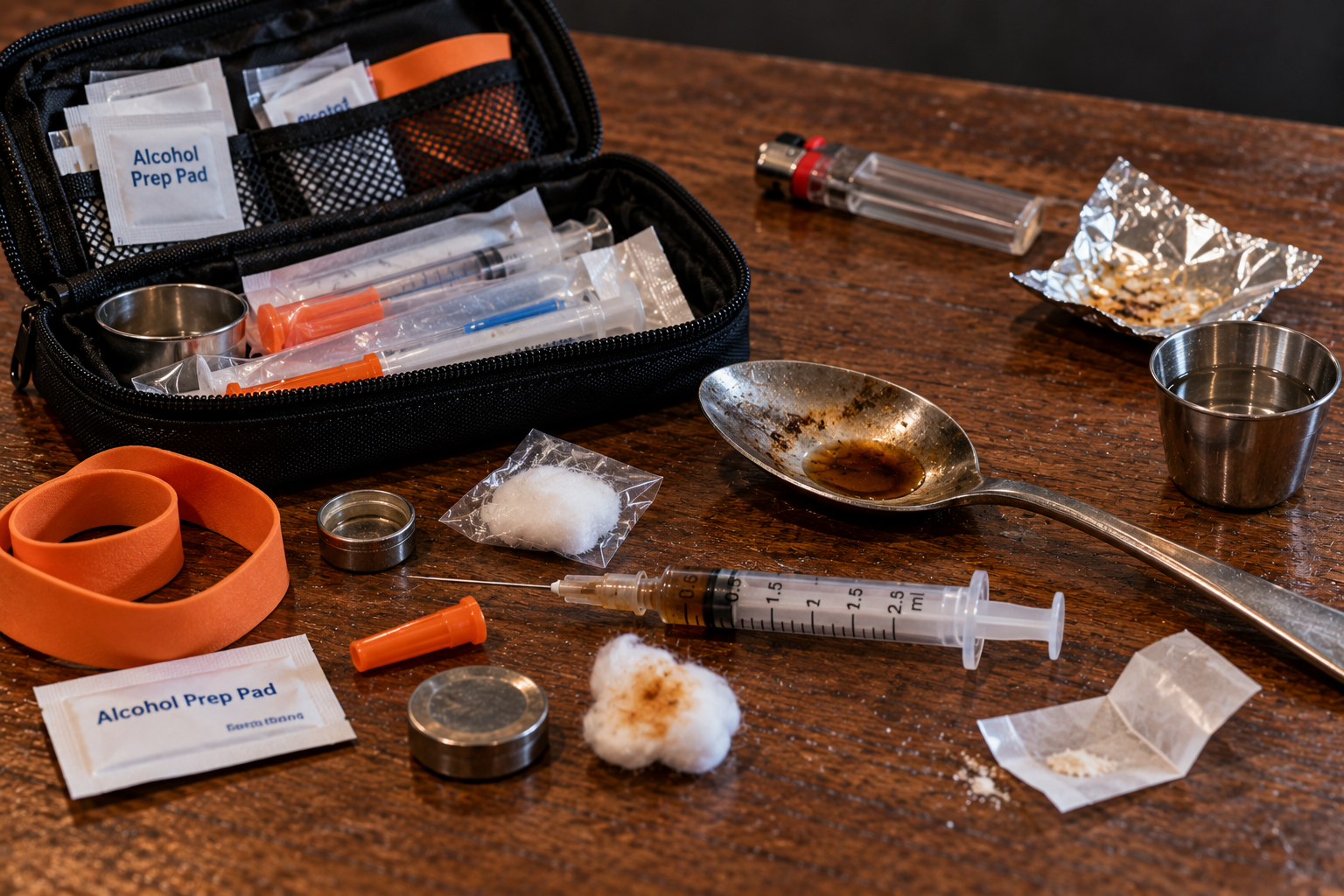
Syringes may be associated with injected drug use, but they also have numerous legitimate medical uses.
Their significance therefore depends entirely on context.
Discarded needles should not be handled casually because they can cause needlestick injuries and may carry blood-borne infections. Health Canada also notes that sharing drug equipment such as needles and pipes can increase the risk of infectious diseases including hepatitis C and HIV.
Pills May Be Harder to Recognize
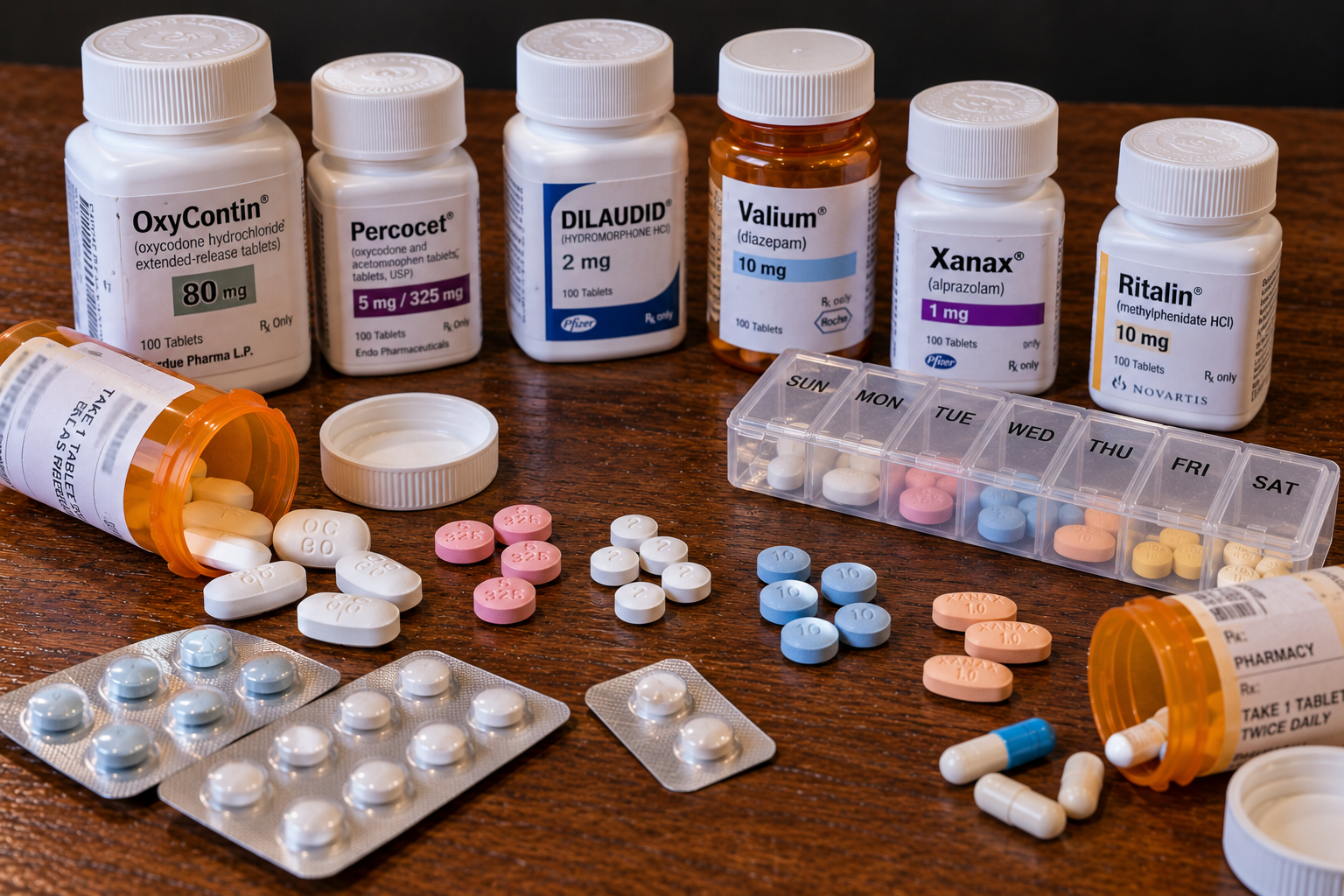
Prescription-drug misuse may leave fewer obvious pieces of specialized paraphernalia.
Possible things that might prompt questions include unidentified loose pills, medications prescribed to someone else, unexpectedly empty prescription containers, quantities of pills that cannot readily be explained, or medication disappearing from elsewhere in the household.
None of those things necessarily establishes misuse.
This is one reason our companion page What the Drugs Look Like shows verified examples of medications that appear in Reggie’s story, such as OxyContin, Percocet, Dilaudid, Valium, Xanax and Ritalin.
The appearance of a pill alone, however, cannot establish what it contains. Counterfeit pills can closely resemble legitimate medication.
Ordinary Household Objects Can Become Paraphernalia
Drug paraphernalia does not always come from a store.
Ordinary household objects can sometimes be altered or repurposed. That can make the signs particularly difficult for a parent to understand.
What Was Happening to the Kitchen Knives?
This happened in our own family.
When Reggie was young, our parents sometimes wondered what was happening to the kitchen knives. Knives would disappear or turn up with burned and blackened ends.
They did not initially understand why.
The damage was associated with a way of consuming hash commonly known as “hot knifing,” in which heated knife blades were used in connection with smoking cannabis resin.
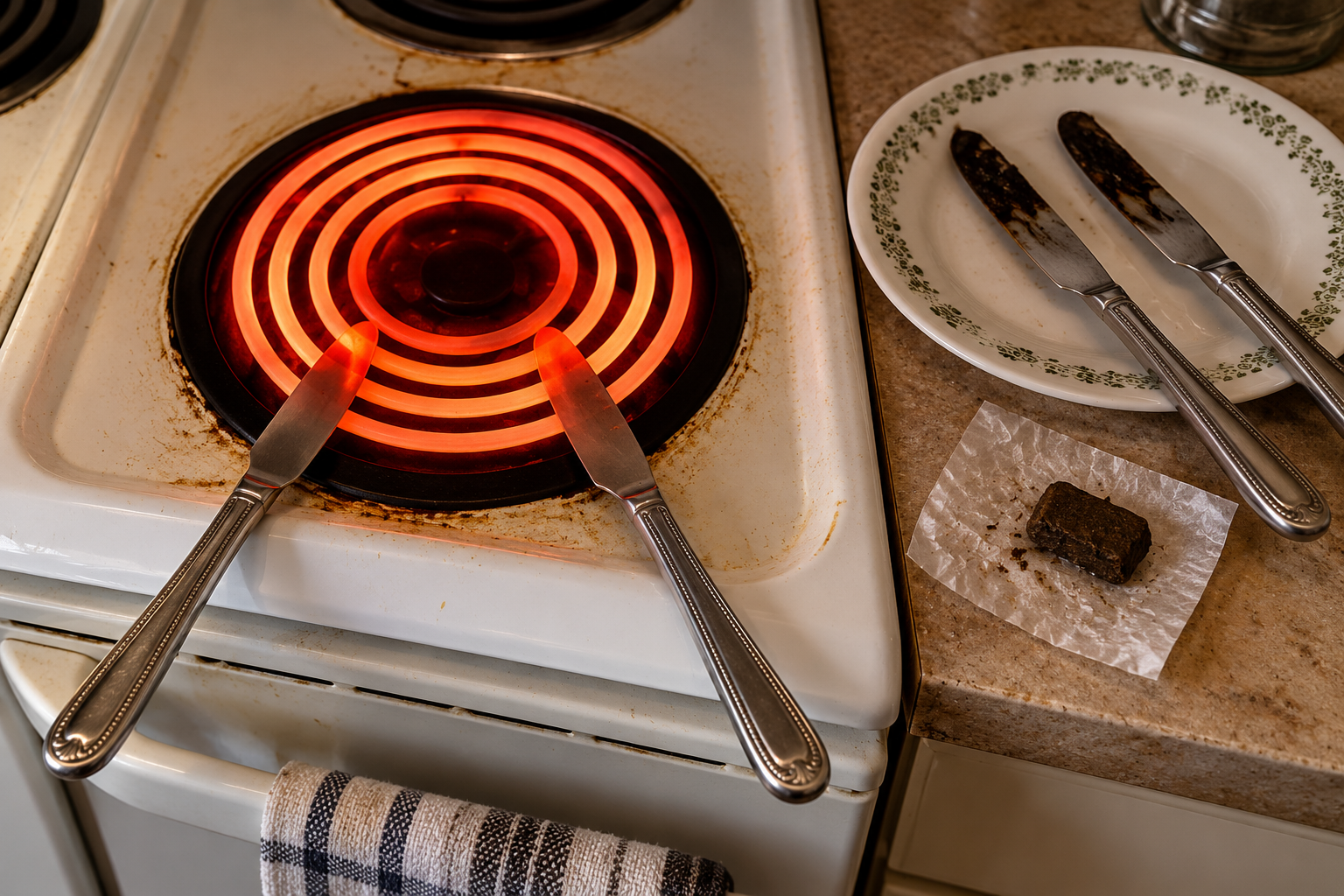
Other ordinary household objects could also be improvised for use in consuming drugs.
Looking back, what mattered for our parents wasn’t knowing precisely how the drugs were being consumed. The warning sign was much simpler:
Something ordinary in the house kept disappearing or coming back inexplicably altered or damaged.
That is the kind of clue that can easily mean nothing to a parent who has never encountered drug use before.
Other Unexplained Household Changes
The same principle can apply more broadly.
Parents may notice objects disappearing, being modified or appearing in unusual places. Household medications may disappear. Unfamiliar containers, packages or smoking-related objects may appear.
Rather than assuming what an object means, it may be more useful to ask why it is there and consider whether it is part of a larger pattern.
Smells, Smoke and Residue
Some drugs and methods of consumption can produce distinctive smells, smoke or residue.
However, smell should never be treated as a reliable drug-identification technique, and no one should deliberately smell an unknown powder or substance closely in an attempt to determine what it is.
An unexplained recurring smell may simply be another reason to pay attention and ask questions.
Clothing, Drug Imagery and Popular Culture
Drug culture has long overlapped with music, art, clothing and popular culture.
A parent may encounter clothing, posters, stickers or other items displaying cannabis leaves, psychedelic imagery, references to particular drugs or other drug-related symbolism.
Music can also have historical connections with particular drug cultures. Bands including the Grateful Dead and Phish, for example, have been associated with broader psychedelic and countercultural scenes.
But a band T-shirt, musical preference, poster or style of dress is not evidence that someone uses drugs.
A teenager may wear a shirt because they like the band, the artwork, their friends or simply the appearance of the clothing.
Health Canada notes that popular culture—including music, television, movies and social media—can influence how teenagers perceive drug and alcohol use. That makes popular culture worth discussing with young people, but not something from which parents should draw conclusions about an individual child.
Warning Signs Beyond Physical Objects
Objects are only one possible piece of the picture.
Changes in behaviour may be considerably more important than finding a particular object.
Possible changes can include:
- a significant change in friends or social groups;
- withdrawal from family or longtime friends;
- declining school performance or missing school;
- loss of interest in activities previously enjoyed;
- substantial changes in sleeping or eating;
- unusual secrecy or unexplained absences;
- unexplained financial problems or increasing need for money;
- noticeable changes in mood or behaviour;
- problems concentrating or remembering things;
- deteriorating relationships at home, school or work; and
- increasingly organizing activities or friendships around drug or alcohol use.
These signs are not specific to drug use. Some can occur with stress, physical illness, mental-health difficulties, family problems or ordinary changes during adolescence.
NIDA specifically cautions that behavioural changes potentially associated with adolescent drug problems can have other medical or mental-health explanations and may need proper evaluation rather than assumptions.
Look for Patterns, Not Proof
A parent does not need to become a detective.
Finding rolling papers should not lead automatically to an accusation. Neither should a change in friends, a particular T-shirt or a bad report card.
But several unexplained changes occurring together may be a reason to pay closer attention.
The goal is not to catch someone. It is to recognize that something may be changing and open a conversation early enough to help.
Health Canada recommends approaching these conversations calmly, explaining the behaviours that caused concern, listening, avoiding judgment and focusing on the person’s well-being rather than lecturing or using scare tactics.
If You Find an Unknown Drug
Do not taste, closely smell, crush, burn or otherwise experiment with an unknown substance to determine what it is.
Today’s illicit drug supply can contain substances that are not visible and may not be what the person purchasing the drug expected.
If there is an immediate medical emergency, loss of consciousness or difficulty breathing, call emergency services.
A Note About Fentanyl
Fentanyl is not part of Reggie’s documented drug history, and this archive does not present it as a drug that Reggie used.
It is mentioned in our educational material because the illicit drug environment today is substantially different from the one Reggie experienced, particularly because fentanyl can appear unexpectedly in other illicit substances and counterfeit pills.
References to fentanyl on these pages therefore provide current safety context, rather than an additional chapter in Reggie’s drug history.
Why This Page Is Part of Reggie’s Archive
This page isn’t here to turn parents into drug experts.
It exists partly because our own family experienced what it was like not to know what we were looking at.
A burned kitchen knife, an unfamiliar pill or an unusual piece of glass may make perfect sense in hindsight. At the time, a parent may have no idea why it is there.
Reggie’s writings preserve his perspective on addiction and drug use. The experiences of the people around him preserve another part of that story: what families saw, what they missed, what they misunderstood, and what they learned only later.
If helping another family recognize one of those signs leads to an earlier conversation, then this part of Reggie’s story may still have something useful to offer.