
When Keeping a Secret Isn’t Protecting Them
Brothers and sisters often know things about one another that their parents don’t.
That was true in our family. When Reggie was young, I knew about some of the things he was doing that our parents did not know about. At the time, telling them would have felt like snitching on my brother.
I wasn’t simply ignoring what Reggie was doing. I confronted him and tried to talk some sense into him. On one occasion, Constable Bob Payne, a local police officer whom I respected, approached me about Reggie’s activities and asked me to try to straighten him out. I spoke to Reggie, but it didn’t change his behaviour.
Looking back many years later, I cannot say that telling our parents everything I knew would have changed what happened. Reggie made his own decisions, and even when I confronted him directly, he did not necessarily listen.
But the experience left me with a different question:
When does keeping someone’s secret stop protecting them?
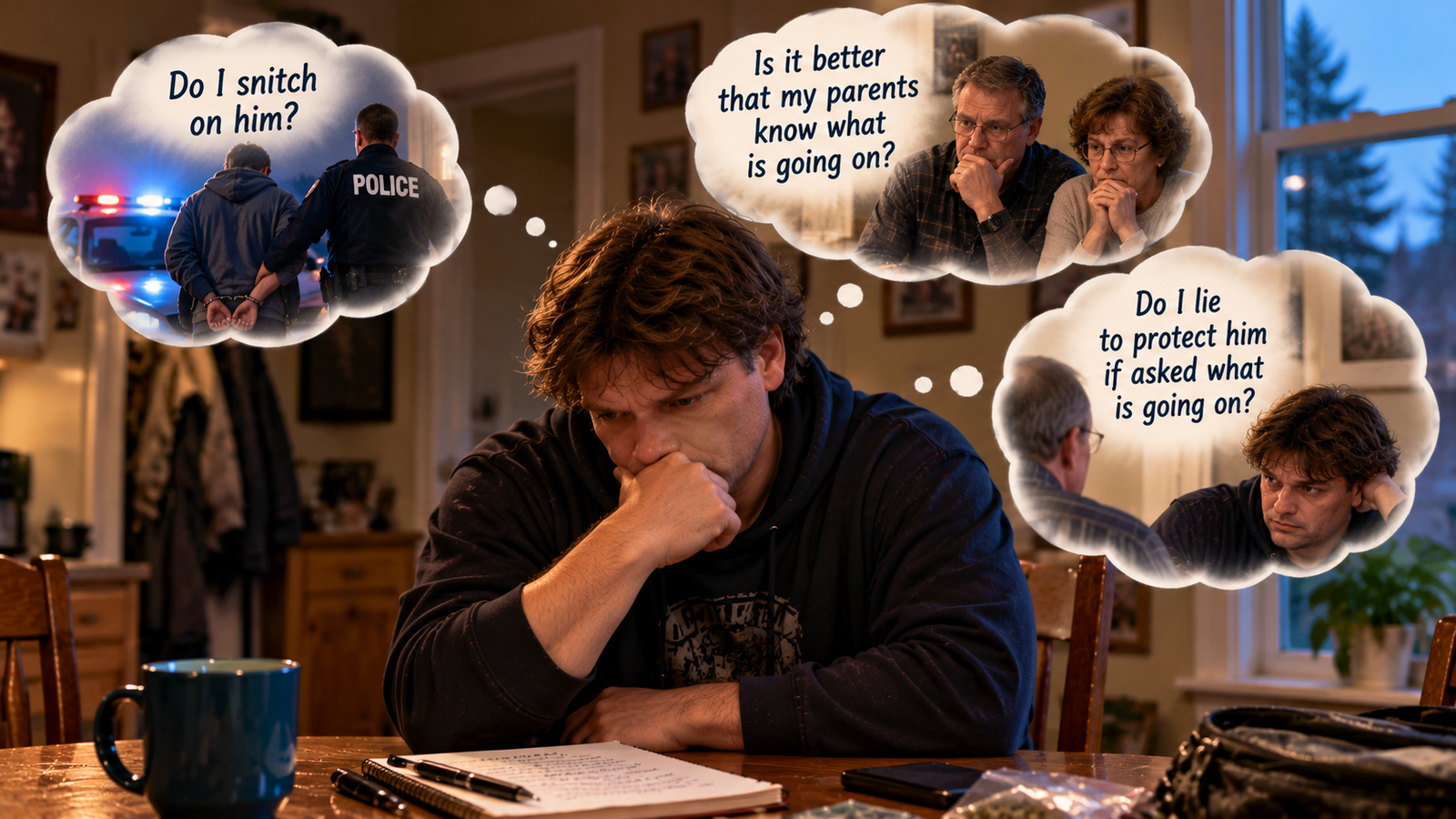
Three Questions I Wish I Had Thought About Differently
Do I Snitch on Him?
For a brother, sister or close friend, the word snitching can carry a lot of weight. Telling someone else what you know can feel like betrayal, particularly when you believe the consequences for that person could be serious.
There are legitimate reasons for respecting someone’s privacy. Not every mistake, confidence or private conversation needs to be reported to parents or other people. But privacy is not the same thing as keeping serious danger secret.
There are many reasons someone may decide to stay quiet:
- Loyalty to a brother, sister or friend
- Fear of losing their trust
- Fear of getting them arrested or punished
- Believing you can handle the situation yourself
- Believing they will stop on their own
- Worrying that telling someone will make things worse
There are also circumstances where telling someone may become important:
- The behaviour is becoming more serious
- Drugs, theft, violence, threats or dangerous people are involved
- The person may be at risk of overdose or injury
- Other family members are making decisions without important information
- You have tried talking to the person and nothing is changing
- You are carrying a problem you are not equipped to solve
Instead of asking “Am I snitching?”, it may be more useful to ask:
“Is this something I should be trying to handle by myself?”
Is It Better That My Parents Know What’s Going On?
One difficulty within a family is that different people may know different parts of what is happening. A brother may know something his parents do not. A friend may know something the brother doesn’t. Parents may see changes in behaviour without understanding what is causing them.
That happened in our family. At different times, some of us knew or suspected things about Reggie’s activities that our parents did not necessarily know. It didn’t mean that any of us understood the whole situation. We each had pieces of it.
Keeping one of those pieces to yourself can mean that everyone else is making decisions without information that might help them understand what is happening. At the same time, telling a parent does not guarantee that the problem will be solved. The person involved may deny what is happening, become angry or refuse help.
I cannot say that telling our parents more would have changed Reggie’s choices. My own attempts to talk to him did not necessarily change his behaviour.
Telling someone is not the same thing as controlling the outcome. It gives another responsible person information they may need and means you are no longer trying to carry the situation by yourself.
Do I Lie to Protect Him If Someone Asks What’s Going On?
There is an important difference between respecting someone’s privacy and actively lying to conceal what is happening.
You may not want to discuss another person’s private affairs. You may not know all the facts. You may have suspicions rather than proof. Those are legitimate reasons to be careful about what you say.
But deliberately creating a false explanation is different, particularly when a parent, partner, doctor, counsellor or someone concerned about the person’s safety is trying to understand what is happening.
You don’t need to claim certainty about something you don’t know. It is reasonable to say, “I don’t know,” “This is what I saw,” “This is what he told me,” or “This is what I suspect, but I can’t prove it.”
If police or legal proceedings are involved, your rights and obligations depend on the circumstances and where you live. Seeking appropriate legal advice is different from inventing a false story to conceal what happened.
You do not have to know how to solve the problem in order to tell the truth about what you know.
When Looking the Other Way Becomes Enabling
Families help one another. We give someone a place to stay, lend them money, make excuses for them, forgive mistakes and sometimes protect them from consequences. Usually those things come from love.
But there can be a point where helping someone begins to make it easier for dangerous behaviour to continue.
Keeping a secret may be causing harm when it:
- Allows serious drug use, theft or other criminal activity to continue unnoticed
- Conceals an overdose or other immediate danger
- Prevents family members from understanding what is happening
- Exposes other people in the household to potentially dangerous situations
- Requires you repeatedly to lie
- Draws you into covering up consequences
- Leaves you carrying fear or responsibility that you cannot manage yourself
The intention may still be to protect the person. But sometimes what feels like loyalty can unintentionally protect the behaviour rather than the person.
Sometimes Telling Someone Isn’t Snitching
The choice isn’t necessarily between keeping everything secret and telling everyone. Sometimes the better answer is to tell the right person.
Depending on the circumstances and the age of the people involved, that might be:
- A parent or another trusted adult
- Another responsible family member
- A doctor, counsellor or addiction professional
- A teacher or school counsellor
- A lawyer when legal issues are involved
- Emergency services when someone is in immediate danger
You don’t need to broadcast someone’s problems or tell people who have no reason to know. The purpose is to get appropriate help, protect someone from harm or make sure that a person capable of responding understands what is happening.
When Safety Changes the Decision
There are situations where the question becomes more serious than whether someone will be angry with you for telling.
If you believe someone may overdose, harm themselves or someone else, is being threatened, has become involved with dangerous people, or has brought a potentially dangerous situation into the family home, protecting someone’s secret should not take priority over immediate safety.
You also don’t have to confront someone yourself when doing so could put you at risk. Get help from someone who is in a position to respond. If there is an immediate danger to someone’s life or safety, contact emergency services.
Looking Back
When I was Reggie’s brother living through these events, I didn’t have the benefit of knowing how his story would eventually unfold. There were times when I knew things our parents did not, times when I confronted Reggie myself, and things I regarded as matters between brothers rather than things our parents needed to know.
I cannot say that telling our parents everything would have changed Reggie’s life. That would give me an influence over his choices that I did not have.
What I can say is that I now see an important distinction that was much harder to see when I was younger: keeping someone’s confidence can be an act of loyalty. Keeping dangerous behaviour secret can be something very different.
If you are carrying a secret about someone you care about and wondering whether telling another person would be a betrayal, there may be a better question:
Am I protecting this person — or am I protecting the situation that is hurting them?