
Opioids
Opioids became one of the most destructive groups of drugs in Reggie’s life. His writings describe experiences with heroin and prescription opioids, the development of physical dependence, severe withdrawal and the increasingly dangerous consequences of addiction.
Before exploring that part of his story, it is helpful to understand what opioids are, why they can produce dependence, how heroin and prescription opioids differ, and how to recognize an opioid overdose.
On This Page:
Part 1 — Understanding Opioids ·
Part 2 — Opioids in Reggie’s Life ·
Part 3 — Selected Stories & Writings
Part 1 — Understanding Opioids
Opioids are a group of drugs that act on opioid receptors in the brain and body. Some are prescribed medically, primarily for pain relief, while others, such as heroin, are produced and sold illegally.
Examples include heroin, morphine, codeine, oxycodone, hydromorphone (Dilaudid) and fentanyl. Opioids can produce pain relief, drowsiness and euphoria, but they can also slow breathing, which is what makes an opioid overdose particularly dangerous.
Heroin and Prescription Opioids
Heroin is an illegal opioid that can be snorted, smoked or injected. Reggie’s writings describe more than one method of using heroin, making those distinctions relevant to his story.
Prescription opioids include medications such as morphine, codeine, oxycodone and hydromorphone. Although they have legitimate medical uses, they can also cause physical dependence and can be dangerous when misused.
This distinction is important in Reggie’s story because his experience with opioids was not limited to heroin. His writings also refer to prescription opioids, including Dilaudid, a brand name for hydromorphone.
Tolerance, Dependence and Withdrawal
With repeated opioid use, the body can develop tolerance, meaning that more of the drug may be needed to produce the same effect. Physical dependence can also develop, causing withdrawal when opioid use is stopped or substantially reduced.
Withdrawal can include sweating and chills, nausea, diarrhea, body aches, insomnia, anxiety, agitation and intense cravings.
Tolerance is also important to overdose risk. After a period without opioids, tolerance may fall. Returning to an amount previously tolerated can then be especially dangerous.
These concepts become important later in Reggie’s story. His account of becoming sick while travelling in Iceland provides a first-hand description of what physical dependence and withdrawal had come to mean in his everyday life.
Recognizing an Opioid Overdose
An opioid overdose can slow or stop breathing and is a medical emergency.
Possible signs include:
- inability to wake the person
- very slow, weak or absent breathing
- choking, gurgling or unusual snoring sounds
- extreme drowsiness or unconsciousness
- blue, purple or grey lips or fingernails
- cold or clammy skin
- very small or “pinpoint” pupils
Naloxone
Naloxone is a fast-acting medication that can temporarily reverse the effects of an opioid overdose and help restore breathing.
Its effects may wear off before the opioid does, so overdose symptoms can return. An opioid overdose therefore requires immediate medical assistance even when naloxone has been given.
Call 9-1-1, give naloxone if it is available, and stay with the person until emergency help arrives.
For current information about naloxone and where kits are available, visit the Government of Canada website and search for “Naloxone.”
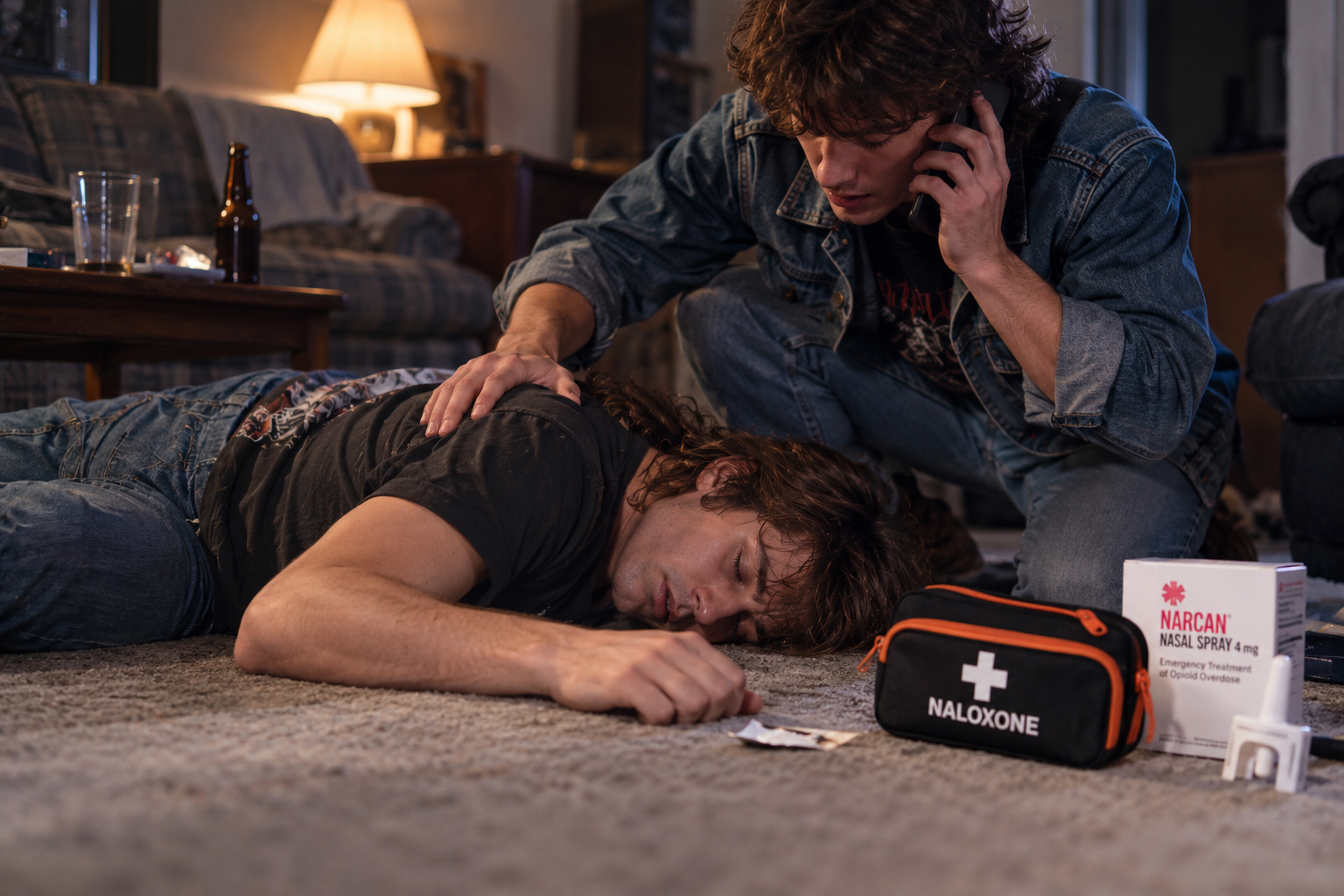
Artist’s reconstruction: AI-generated image illustrating a possible opioid overdose emergency and response. Shown for educational purposes; it does not depict an actual event involving Reggie.
Part 2 — Opioids in Reggie’s Life
Opioids entered Reggie’s life after years of experience with marijuana, hash, hallucinogens and cocaine. His writings allow us to follow heroin from an early experiment that made him violently ill through to regular use, physical dependence, injection, withdrawal and increasingly serious consequences.
Unlike some parts of Reggie’s drug history that have to be reconstructed from scattered references, much of this progression can be told in his own words. Family recollections add another perspective, particularly on the boundaries Reggie believed would protect him as his heroin use became more serious.
Reggie Tries Heroin for the First Time
Reggie wrote about trying heroin for the first time after being introduced to it by a friend who had been using heroin for some time. As far as his family knew, the friend was not addicted to the drug, and Reggie himself did not become addicted after this first experience.
Reggie snorted the heroin rather than injecting it. The experience was anything but pleasant. He became extremely sick, vomited repeatedly and recalled that his skin appeared almost blue.
What makes the account particularly troubling is what happened afterward. Despite how badly the heroin had affected him, Reggie wrote that he wanted to try it again.
Family Perspective
Looking back, his family believes another danger may have been at work. Reggie often displayed great confidence in his ability to outsmart risks and avoid consequences.
The friend who introduced him to heroin may unintentionally have reinforced that confidence. Here was someone who, as far as the family knew, had used heroin for a considerable time without becoming addicted. Reggie tried it himself and did not immediately become addicted either.
From the family’s perspective, those experiences may have made heroin appear more controllable than it really was.
Read: Reggie Tries Heroin for the First Time
Heroin Becomes Part of His Life
Heroin did not immediately become Reggie’s primary drug. Cocaine remained a major part of his life through the years that followed.
By 1994, however, the balance was changing. In The History of Me, Reggie wrote that he began cutting back on what he called his “massive coke use,” began using heroin and experienced his first heroin withdrawal.
Heroin was no longer simply something he had experimented with years earlier. His body was becoming physically dependent on opioids.
“I Would Never Use a Needle”
When Reggie’s family first learned that he was using heroin, his brother remembers confronting him about the risks.
Reggie was confident that he would not become addicted because he was snorting heroin rather than injecting it. He also said there was a line he would never cross: he would never inject heroin with a needle.
As his heroin use continued, that boundary eventually disappeared. Reggie progressed from snorting heroin to injecting it.
Another Line He Would Never Cross
When his brother learned that Reggie had begun injecting heroin, he confronted him again—this time warning him about hepatitis and other infections associated with sharing injection equipment.
Reggie said that although he was now injecting heroin, he would never share a needle.
That boundary did not hold either.
According to family recollection, about a year later Reggie was diagnosed with hepatitis C. The family subsequently learned that on one occasion, while in the back room of Days of Wine & Beer, Reggie had shared a needle with a friend.
The exact source of Reggie’s hepatitis C cannot be established from the surviving evidence, but the incident illustrates how boundaries he once believed would protect him had changed as his addiction progressed.
Heroin Withdrawal in Iceland
One of Reggie’s clearest accounts of physical dependence comes from a trip to Iceland.
Knowing that he would be travelling, Reggie attempted to ration his heroin beforehand. Despite his preparations, he went into withdrawal after arriving.
He tried using Dilaudid, a prescription opioid, but his account describes spending much of the trip sick in his hotel rather than experiencing the country he had travelled to see.
The story demonstrates how profoundly dependence had begun controlling his life. A trip abroad could no longer be separated from whether he had access to opioids.
Read: Heroin Withdrawal in Iceland
The Risk of Overdose
By the mid-1990s, overdose was no longer simply a potential danger in Reggie’s life.
On February 2, his parents happened to visit and found him unconscious in bed and unable to be awakened. Reggie later wrote that he woke surrounded by paramedics. He was taken to the Queen Elizabeth Hospital and subsequently spent time in hospital, detox and treatment.
Only weeks later, Reggie experienced another frightening episode while flying back to Halifax.
He wrote that after boarding the aircraft he went to the washroom and snorted heroin. After returning to his seat, his next memory was waking with an oxygen mask over his face and the flight crew surrounding him. He was told that he had turned blue and that they thought he was dying.
An ambulance was arranged to meet the aircraft in Halifax, but Reggie was frightened that the heroin he was carrying would be discovered. He concealed the drugs and persuaded the crew that alcohol and Gravol might explain what had happened, and the ambulance was cancelled. Rather than seeking medical help, he later continued using the heroin he still possessed.
Read: Mum Saves Reggie as He Overdoses
Part 3 — Selected Stories & Writings
Reggie’s own writings provide unusually direct accounts of his experience with heroin, physical dependence, withdrawal and overdose. The selections below provide additional detail and first-hand accounts of important events in that progression.
Reggie Tries Heroin for the First Time
Reggie’s own account
Reggie describes his first experience with heroin: being introduced to the drug by a friend, snorting it, becoming violently ill and nevertheless wanting to try it again.
Read: Reggie Tries Heroin for the First Time
Heroin Withdrawal in Iceland
Reggie’s own account
Reggie describes trying to ration his heroin before travelling, going into withdrawal in Iceland and attempting to relieve his symptoms with Dilaudid.
Read: Heroin Withdrawal in Iceland
Mum Saves Reggie as He Overdoses
Reggie’s own account
Reggie describes being found unconscious by his parents, waking surrounded by paramedics and the hospital, detox and treatment that followed.
Read: Mum Saves Reggie as He Overdoses
Overdoses on Flight
Reggie’s own account
Only weeks later, Reggie describes using heroin aboard a flight to Halifax, losing consciousness and waking with an oxygen mask over his face.
My Story
Reggie’s own account
My Story places Reggie’s heroin use within the larger progression of his life, including addiction, attempts to stop, withdrawal and its increasingly serious consequences.
The History of Me
Reggie’s own timeline
Reggie’s year-by-year chronology records important markers in his opioid use, including beginning heroin and experiencing his first withdrawal in 1994.
Read: The History of Me
Explore More in the Archive
This page highlights selected material from the archive. Additional references may appear throughout Reggie’s writings, family recollections, documents and other stories. Use Search the Archive to explore this subject further.