
The End of Days of Wine and Beer
Reggie’s business had been struggling for quite a while. When he first opened Days of Wine and Beer, it did very well because he had found an underserved niche in the PEI market. In the later years, however, major grocery stores began carrying some of the same supplies. For a small independent business, competing with large corporations became increasingly difficult. There was also a limitation inherent in the business: once customers had purchased the equipment needed to make their own beer or wine, they generally returned only for lower-cost supplies such as sugar, hops and yeast.
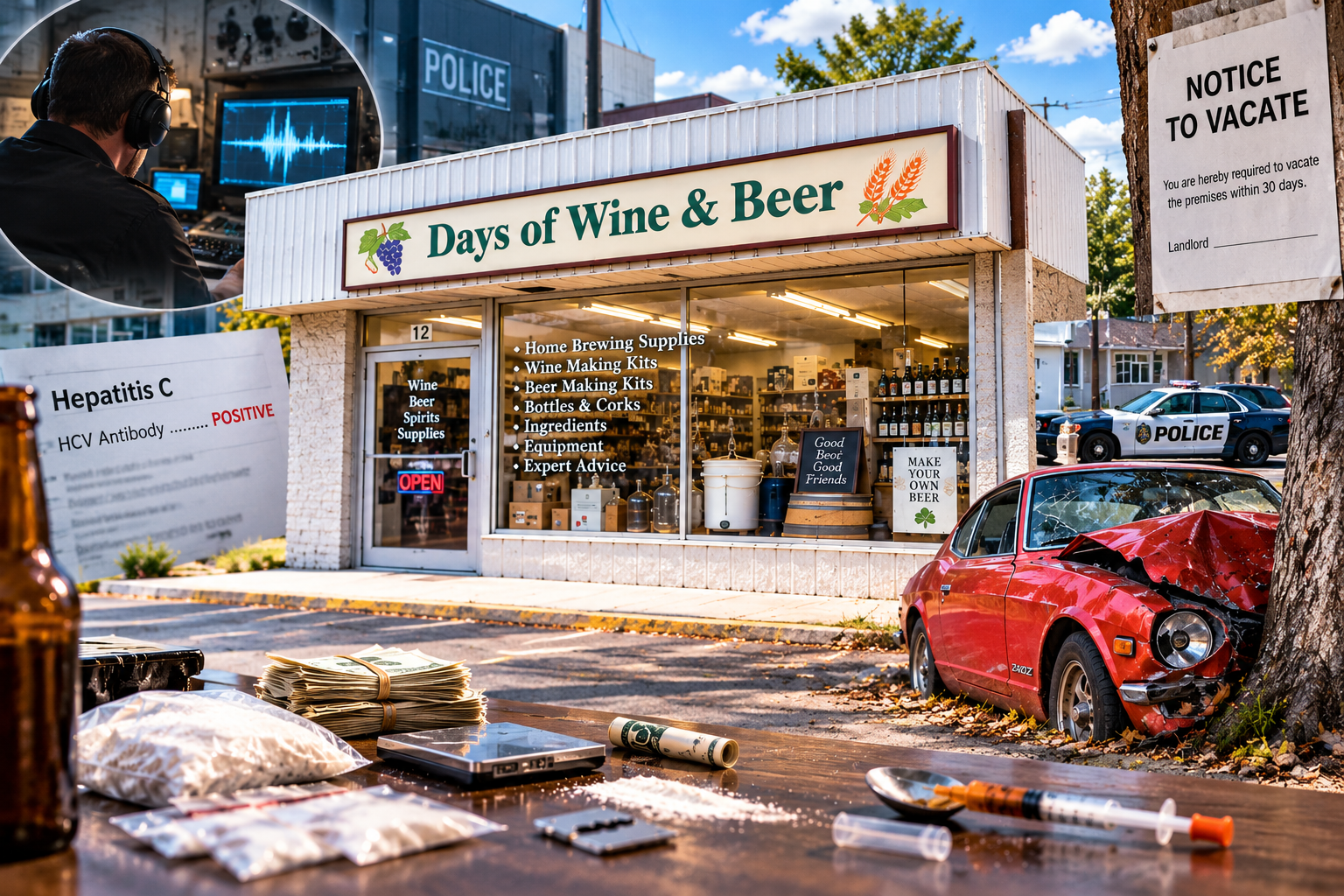
Reggie’s addiction created another serious problem. I remember visiting the store during its final years and seeing Reggie come out of the back room obviously intoxicated. It was not a pretty sight, and I could only imagine what loyal customers might have thought if they encountered him in a similar condition.
Then, on May 13, 1997, Reggie was arrested. During the period that followed, he was dealing with the criminal case and eventually entered pre-sentence rehabilitation. He was no longer in a position to manage the day-to-day operation of Days of Wine and Beer. Much of that responsibility fell to his wife and her sister, who had been managing the store.
By the spring of 1998, the business appears to have reached the end. My recollection is that Days of Wine and Beer had likely already ceased operating in the months before the document below was issued. What remained were the financial obligations and the inventory and equipment of a business that had once been successful.
The Landlord Moves to Recover the Unpaid Rent
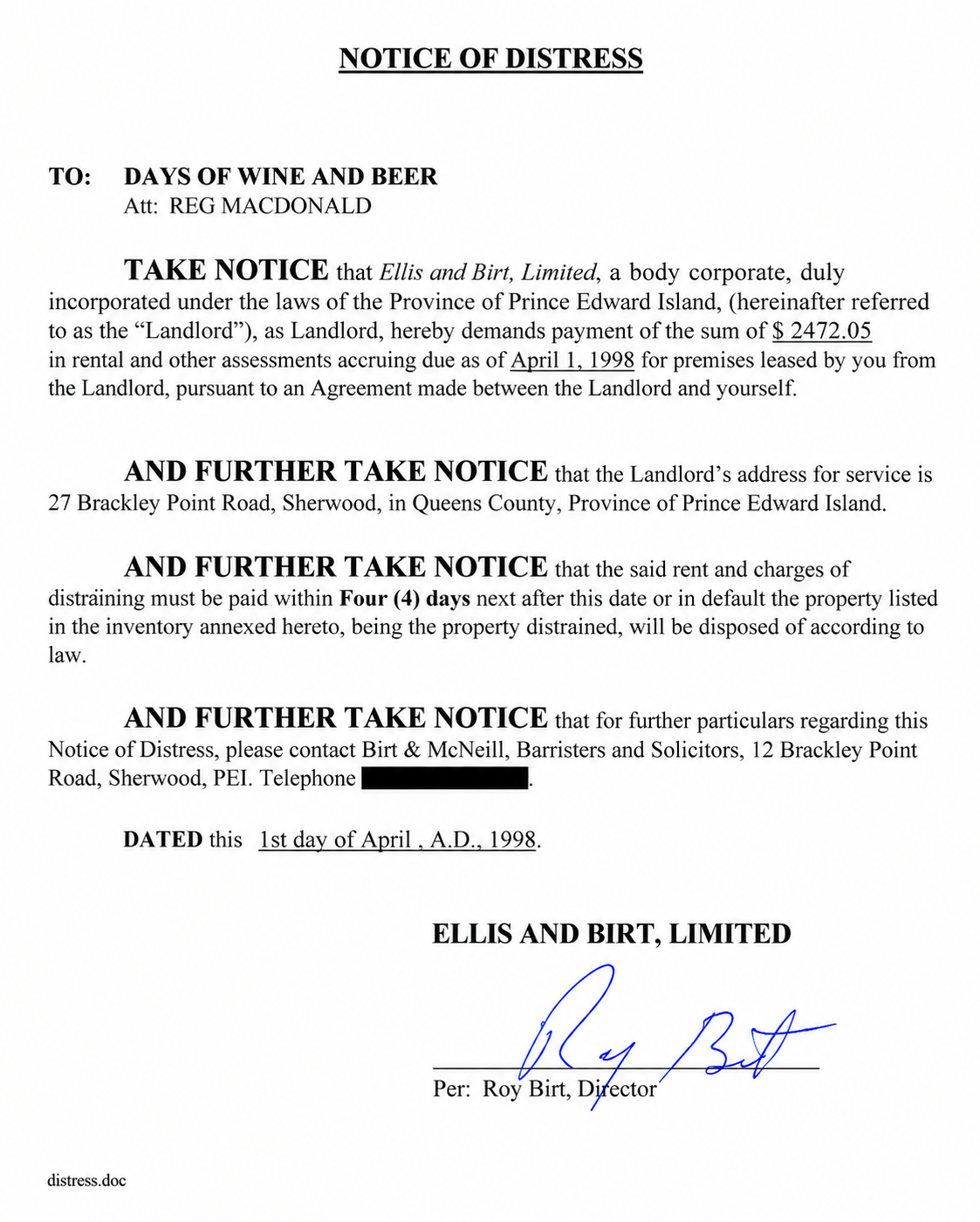
This Notice of Distress, dated April 1, 1998, provides documentary evidence of the financial obligations that remained after Days of Wine and Beer ceased operating.
The landlord, Ellis and Birt, Limited, demanded payment of $2,472.05 in rent and other assessments that it stated had accrued under the lease. The notice also states that property listed in an attached inventory had been distrained and that the amount demanded had to be paid within four days or the property would be disposed of according to law.
Unfortunately, the inventory referred to in the notice is not among the records we currently have, so we don’t know precisely what property was involved.
The notice appears to document part of the winding down of Days of Wine and Beer rather than the event that caused the business to close. By this point, Reggie had been away from its day-to-day operation for some time and, based on our reconstruction of the chronology, the store had already ceased operating.
What remained were financial obligations and business property. This document provides a surviving glimpse of those problems, but it does not by itself tell us the complete circumstances surrounding the closing of the business.